News
Why We Named It Source
The first touch of the data in any matter is the moment that matters most. Everything downstream is derivative. That's why we named our court reporting platform CaseMark Source, and why this release is our biggest yet.
Today we announced CaseMark Source, the official name of our platform for court reporting firms, along with the biggest release in the platform's history. The press release covers the what. I want to cover the why, and specifically why we chose the name.
The first touch of the data
Here's the belief the whole platform is built on: in any matter, the first touch of the data is the moment that matters most. Everything downstream is derivative.
The deposition summary, the medical chronology, the designation clip, the hearing brief, the settlement analysis. Every one of those work products is built from the record. None of them can be better than the record they came from. If the first touch is accurate, certified, and intact, everything built on top of it inherits that integrity. If it isn't, no tool downstream can fix it.
Court reporters own that first touch. A reporter sitting in a deposition is creating the source material for everything that happens in that case afterward. The legal industry has spent two decades treating that as a commodity input and pouring investment into the downstream tools instead. We think that's exactly backwards, and AI is about to make it obvious.
Why this matters more in the AI era, not less
Every AI work product is only as good as what it's grounded in. That's not a slogan, it's how the systems actually work. Ask an AI to summarize a deposition and the summary is a function of the transcript you gave it. Ask it to find every mention of a prior injury and the answer depends entirely on whether the record it's searching is complete and correct.
That's why every AI-generated work product on CaseMark Source is grounded in the firm's source files, with page and line citations back to the record. And it's why we believe the firms that create and certify the record are sitting on the most valuable position in legal AI. They are the source. The name is not clever branding. It's the thesis.
What we shipped
If the record is the source, then the job of the platform is simple to state: remove the busywork between the record and the client, and keep the reporter in control the entire way. This release attacks that from every side.
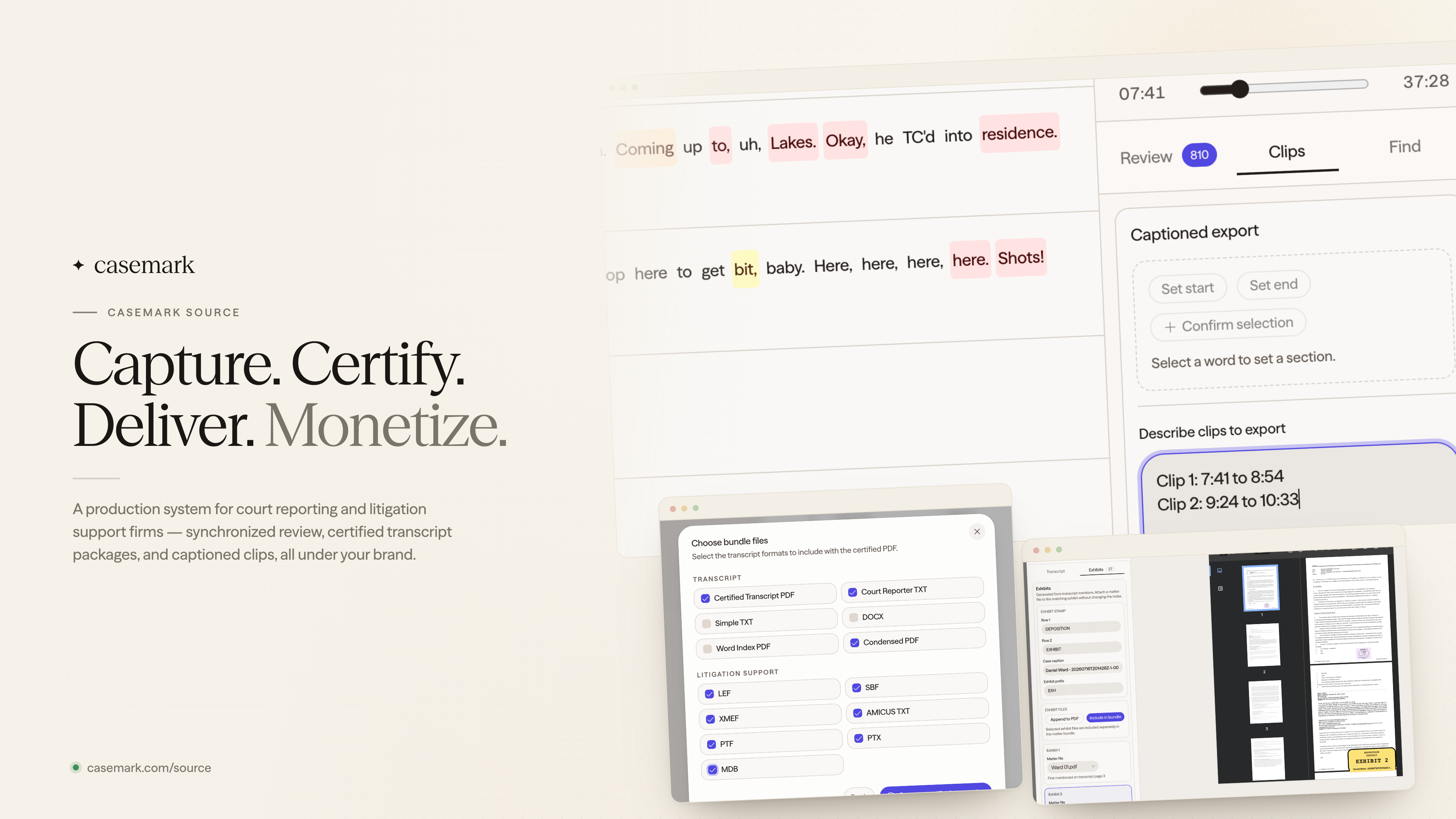
Synchronized video and captioned clips. Recorded testimony now plays beside the timed transcript. Click any word and the video jumps to that moment. Search the testimony and land on the exact exchange. To build designation clips, your team selects a range from the transcript, or just describes the testimony in plain language, by topic, quote, or timestamp, reviews the proposed match, and creates named, captioned MP4s with speaker labels and timestamps. Work that used to leave your shop for a sync vendor and come back on a disc now happens inside the matter, the same day.
Certified transcript packages. Reporters preview the certified transcript, edit cover and certification pages directly in the preview, and generate a complete multi-format package in one pass, including the litigation-support formats teams actually request, like PTX, LEF, and MDB, with an optional AI summary PDF in the same exhibit-ready bundle. And if a transcript was certified elsewhere, you can bring it in and repackage it into every format your client expects, adding signature images, exhibits, a word index, and condensed formats, without recertifying and without touching the authority of the original.
Client self-service, on your terms. Approved clients can now create their own transcriptions and captioned clips directly in your branded portal. You decide which clients get access and what each service costs, whether that's client pay-by-card, firm-managed invoicing, or firm-covered. Your clients get speed. You get a new revenue line that runs while your production team sleeps.
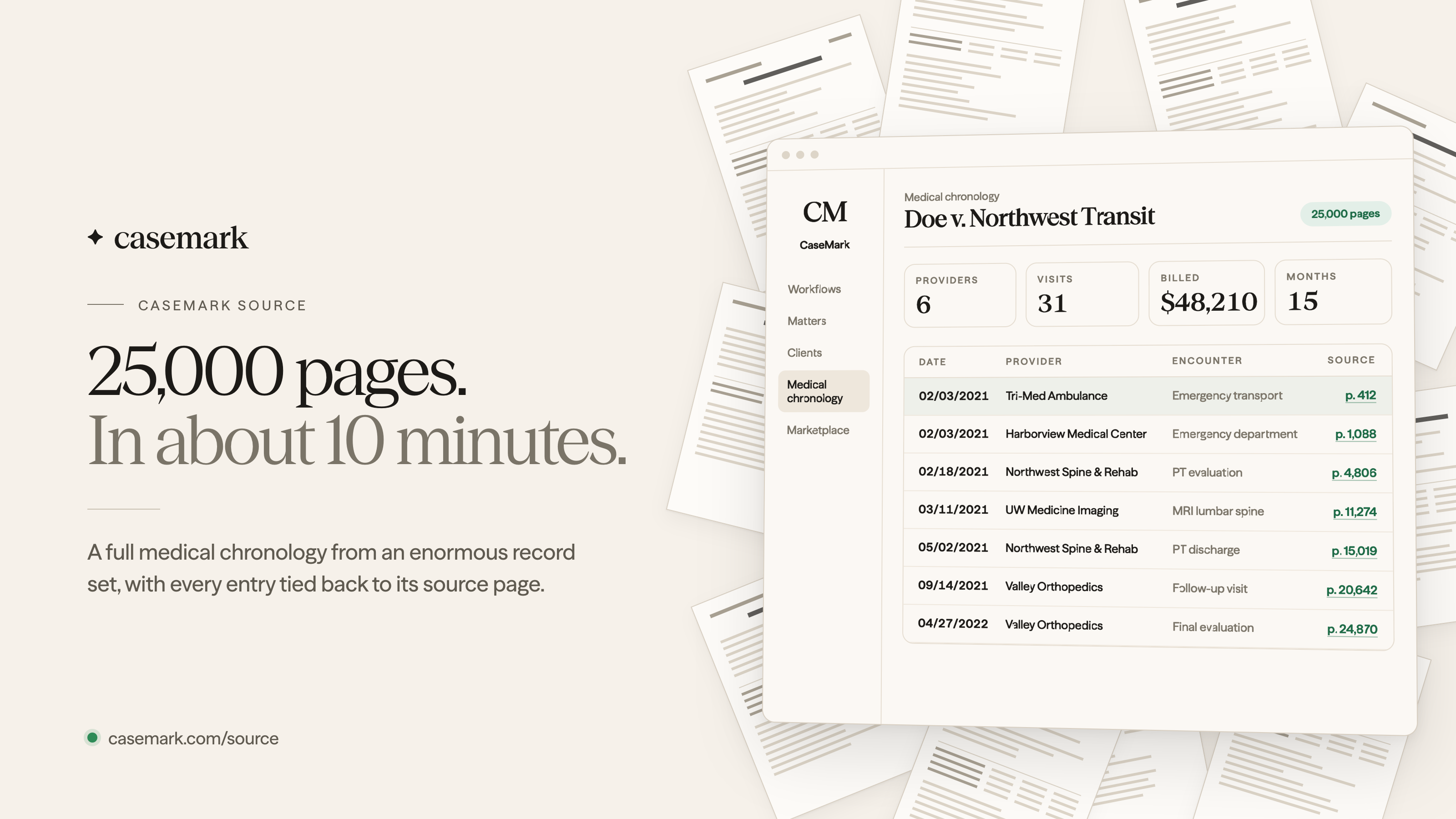
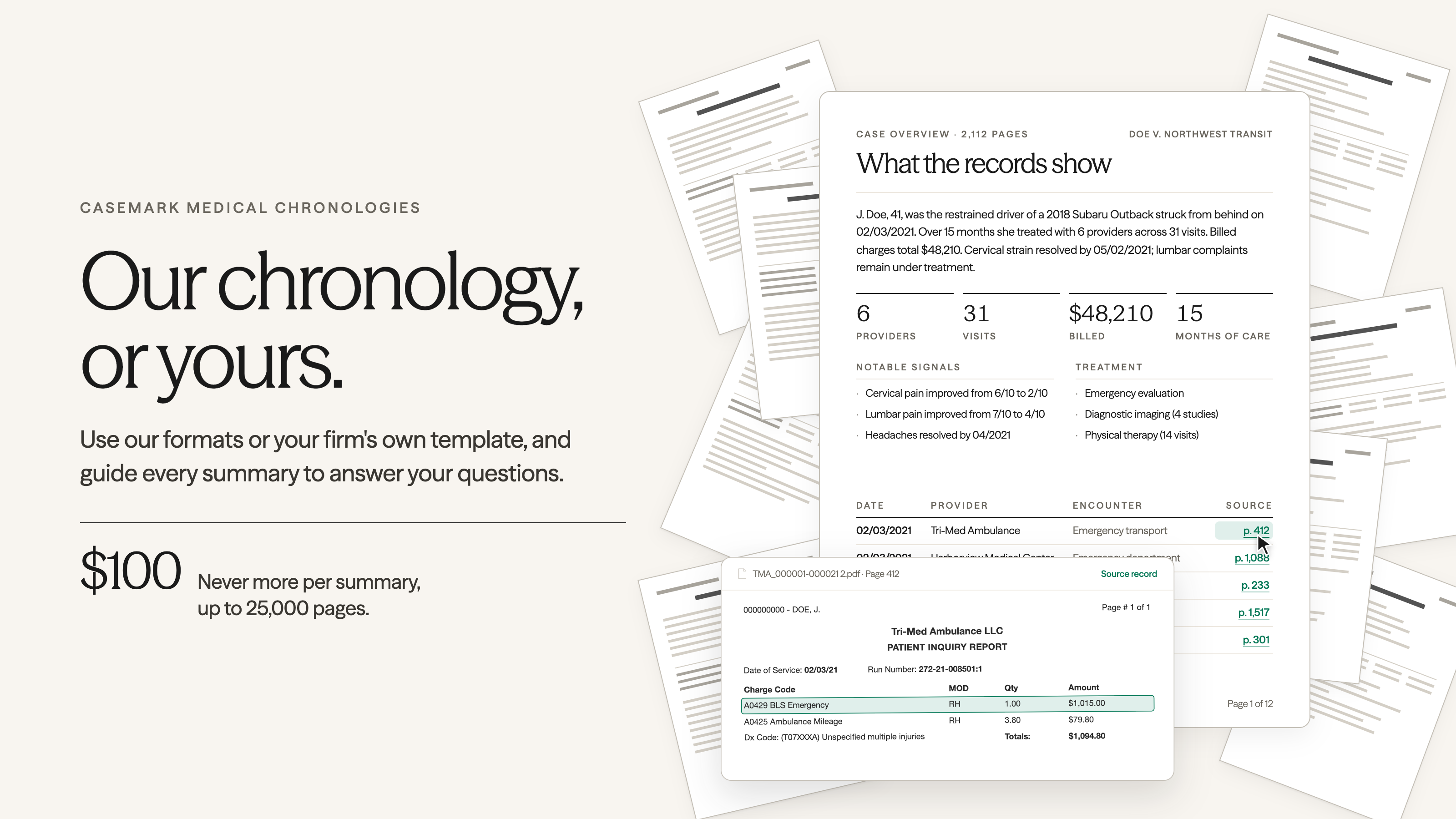
A marketplace of more than 800 legal workflows. Deposition summaries, medical chronologies, hearing and trial summaries, and hundreds more, browsable and installable from agentskills.legal. Enable them firm-wide or offer specific workflows to specific clients as requestable services. Your catalog of deliverables is no longer limited by what you have time to build.
And more. Document translation that preserves the original format for working copies. Insight Pass, now in beta, which asks a few focused questions before drafting so first drafts land closer to intent. Matter chat expanded to more file types, including JPEG exhibits and Excel spreadsheets. One-click workspace switching. In-product release notes.
Firms have historically stitched this work together across aging, single-purpose tools, a YesLaw here, a sync vendor there, a folder of manual conversions in between. Source replaces that patchwork, and then keeps going into the summaries, chronologies, translations, and client services those tools never touched.
The reporter stays in control
I want to be direct about this, because it's the part of the AI conversation our industry gets right to be skeptical about. Nothing on Source ships without a human in the loop. Exhibit indexes are drafts until a reporter reviews them. Plain-language clip requests show the matched testimony, timing, and confidence before anything renders, and an unresolved request cannot be exported. Repackaging a certified transcript never alters the original. Machine translations are clearly working copies, not certified translations. The record belongs to the reporter, and the platform is built to keep it that way.
The same goes for the business. Your clients see your brand, your portal, your pricing. Source is infrastructure underneath the relationship, not a wedge into it. Customer documents are never used to train AI models, and the platform is SOC 2 Type II audited and HIPAA compliant, because the source material of litigation deserves nothing less.
The source is the business
More than 100 court reporting and litigation support firms are on Source today. What we hear from them keeps confirming the thesis: the firms that treat the record as their product are getting squeezed, and the firms that treat the record as their platform are growing. Every deliverable a client will ever order already lives inside the record you created. Source exists to let you produce all of it.
The first touch of the data is yours. Everything downstream should be too.
What makes this possible
One last thing, because it explains how a release this size ships at prices that work for court reporting firms.
CaseMark Source runs on case.dev, our open legal AI infrastructure. It gives our engineers more than 15 primitives purpose-built for legal work, things like transcription, summarization, document conversion, translation, and matter-grounded chat, and every capability you just read about is composed from them. When your team certifies a package, syncs a video, or a client orders a transcription in your portal, that's case.dev doing the work underneath, at the scale and reliability those primitives were built for.
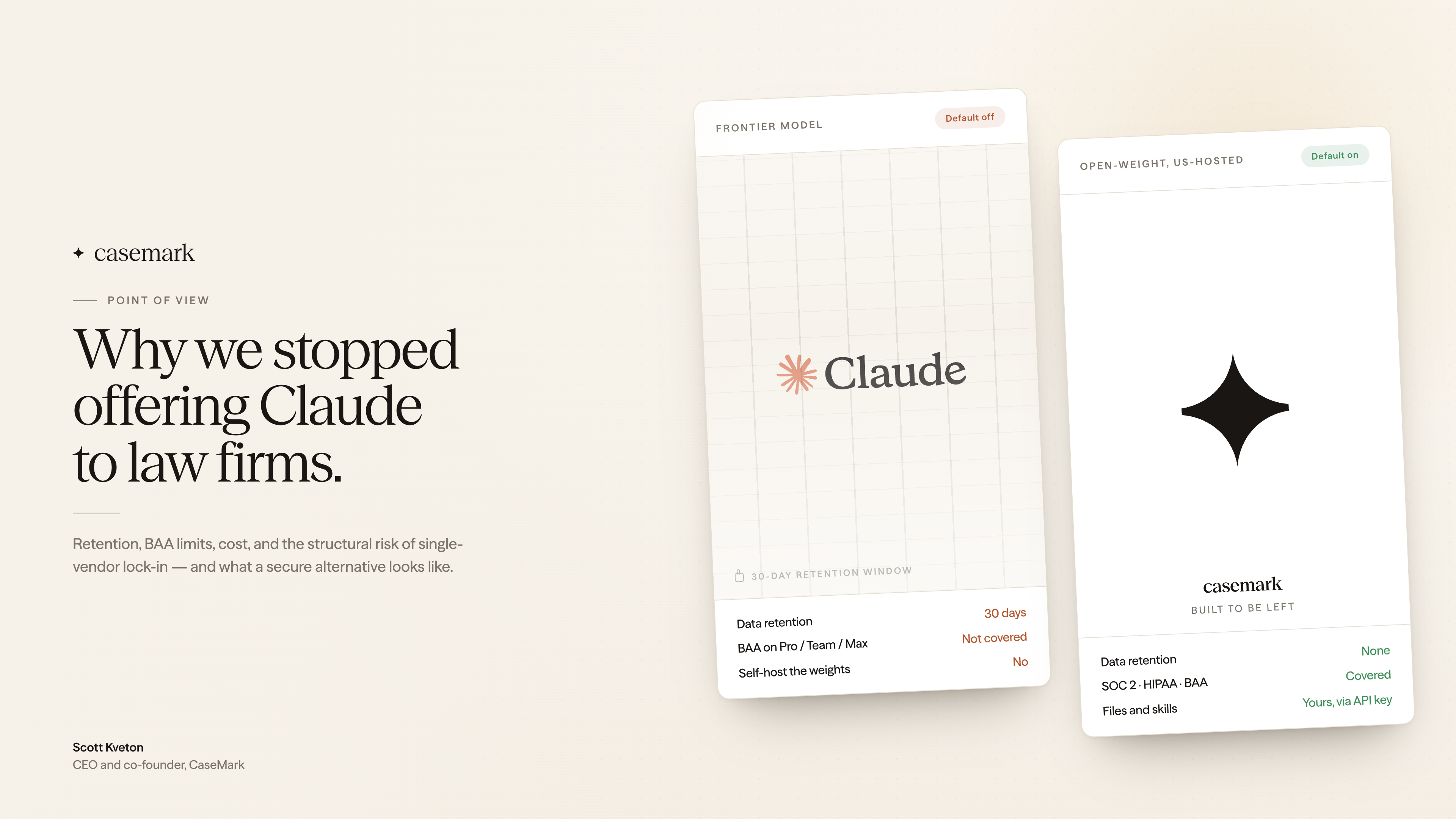
It also gives us model freedom. Because case.dev is model-agnostic, we run open source models wherever they're the right tool for the job, on infrastructure we provision, instead of renting every token from a retail AI provider at whatever the meter says. Open source models keep getting better and cheaper. Retail AI pricing doesn't pass that along. We do. It's a big part of why AI summaries on Source start at $25, why client self-service can be priced in a way that firms actually make money on, and why our costs go down over time while the platform does more.
I've spent my career on open infrastructure, from the Open Source Lab at Oregon State to OpenID and OAuth, and the lesson has never changed: the durable value lives in open foundations and the work that flows through them. case.dev is that foundation for legal. Source is what it makes possible for the people who create the record.
CaseMark Source is live now. If you run a court reporting or litigation support firm and want to see it on your own work, book a walkthrough and we'll get you set up.